Facades of Belonging

Haripriya Dalal

2/21/20264 min read

Facades of Belonging: The Human Life of Semi-Open Spaces in Indian Architecture

An essay on verandas, balconies, and the evolving materiality of the Indian façade

- By Haripriya Dalal 280825

India’s architecture has always lived in the in-between. In a country defined by its predominantly tropical climate and layered social landscape, much of life happens not strictly indoors or outdoors—but somewhere in the middle. The veranda, the balcony, the threshold—these are not incidental spaces. They are essential zones where architecture meets life, where people meet people, and where culture meets climate.

In India’s first and second-tier cities—which still house over 60% of the population—these semi-open spaces have long formed the unofficial living rooms of the street. Whether it’s the morning ritual of watering the tulsi, elderly neighbors reading the newspaper, or a cobbler renting a patch of a veranda for his daily work, these spaces extend the home into the city, and the city into the home.

Growing Up in Between

My own memories are steeped in such spaces. Growing up in the old core of a city, the balcony was my quiet companion. It served as my study, my refuge during crowded family gatherings, and my observatory during monsoon evenings when the street below fell into wind and silence. From that perch, I saw not just people, but patterns—rhythms of pause and movement, conversations drifting through the air, and the first birdsong before dawn.

When I walked the historic cores of other cities—Udaipur, Venice, Maastricht, Jaisalmer, Kochi—I felt the same silent stories being told. Facades that were neither closed nor open. Walls that breathed. Shaded thresholds that provided comfort without invitation. They whispered of civilizations negotiating with time, belief, and weather. Every detail—bracket, railing, cornice—spoke of adaptation.

These were facades with responsibilities: to shade, to cool, to welcome, to express.

Material Memory: Stone, Wood, and the Journey Outward

As I walked from the inner city outward, I witnessed a material journey unfold across the facades.

Near the origin points of cities like Pune, stone and wood held buildings together—not just as decorative elements but as primary structural systems beyond materials. They told a tectonic story, showing how the roof met the bracket, the bracket met the column, and the column met the earth.

But beyond the core, the story changed. Load-bearing structures gave way to RCC frames. Steel sections grew slimmer, windows wider. Post-1990, the facades began reflecting a more industrial vocabulary. The warm tactility of stone was replaced with polished tiles. Wood gave way to aluminum or PVC. Materials became mass-produced, standardized, and preassembled. The façade flattened from a layered, volumetric composition into a 2D collage of fenestration and cladding.

Yes, the changes were inevitable—spurred by technological progress, rising land value, and the speed of urbanization. But in many cases, the shift came without climatic or cultural sensitivity. Buildings in hot-dry regions began adopting expansive glazing and steel skin—choices better suited for temperate zones or air-conditioned interiors. In the process, the traditional intelligence of climate-responsive design was eroded.

Even the use of stone and wood, once structural and expressive, was demoted. Due to quarry depletion and forest conservation policies, these materials began appearing only as thin veneers or decorative coatings—their structural legacy forgotten, their material truth diluted.

Façade as Storyteller, Not Just Surface

This is not a sentimental comparison between the old and the new. Every era of architecture has its responsibilities—to its time, its people, its technologies. But somewhere in the rapid shift toward efficiency and modernity, we seem to have forgotten to ask:

What else can a façade do?

Can it once again become a storyteller? A mediator of climate? A platform for social life? Can it allow for generosity, as it once did—offering a patch of shade to a passer-by, a spot for a street vendor, a frame for community expression?

The façade is not just the face of a building—it is the building’s first gesture to the world outside. Its texture, depth, transparency, and material honesty can create an architecture that not only performs but participates in its environment.

From Element to Experience

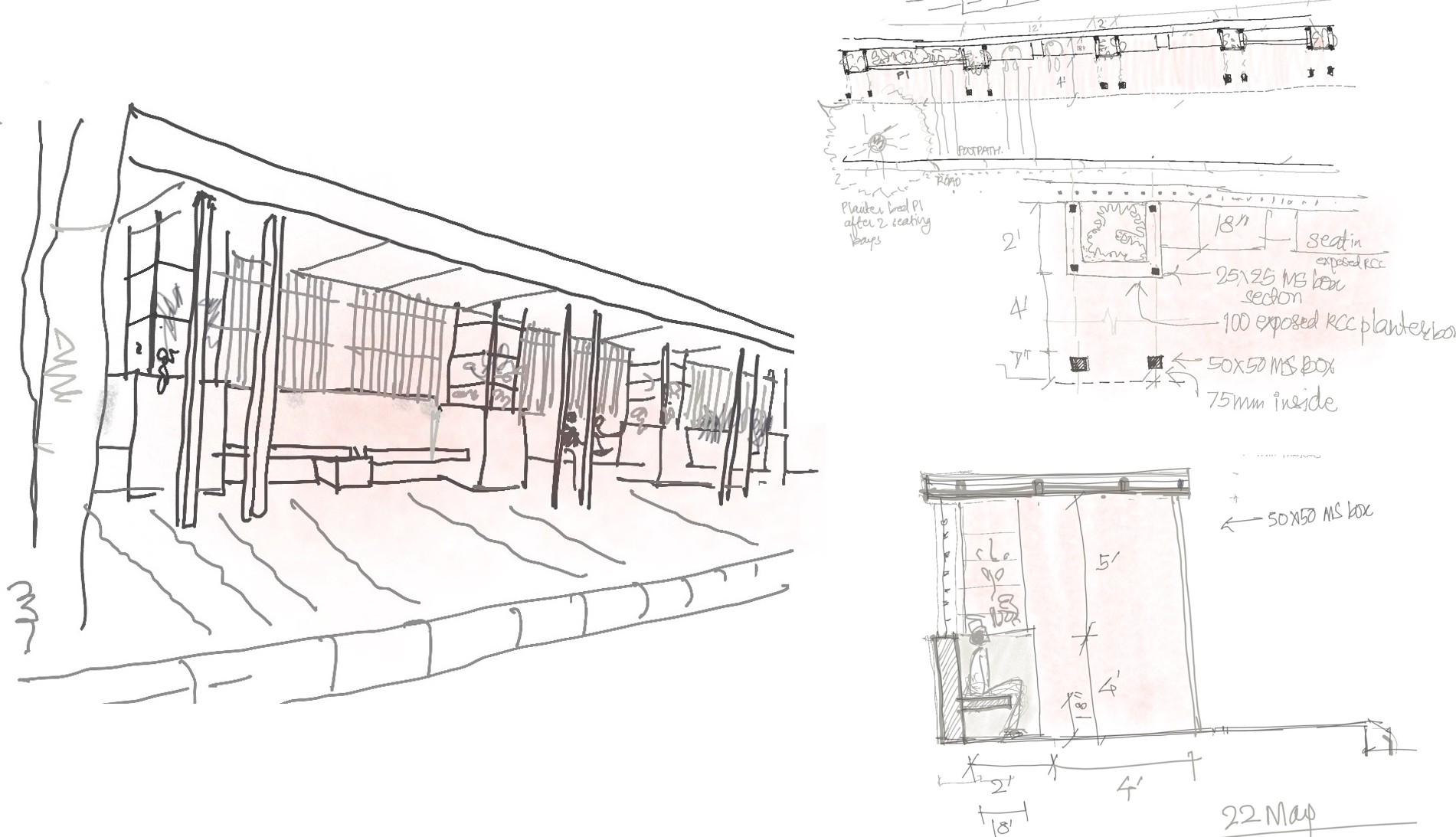
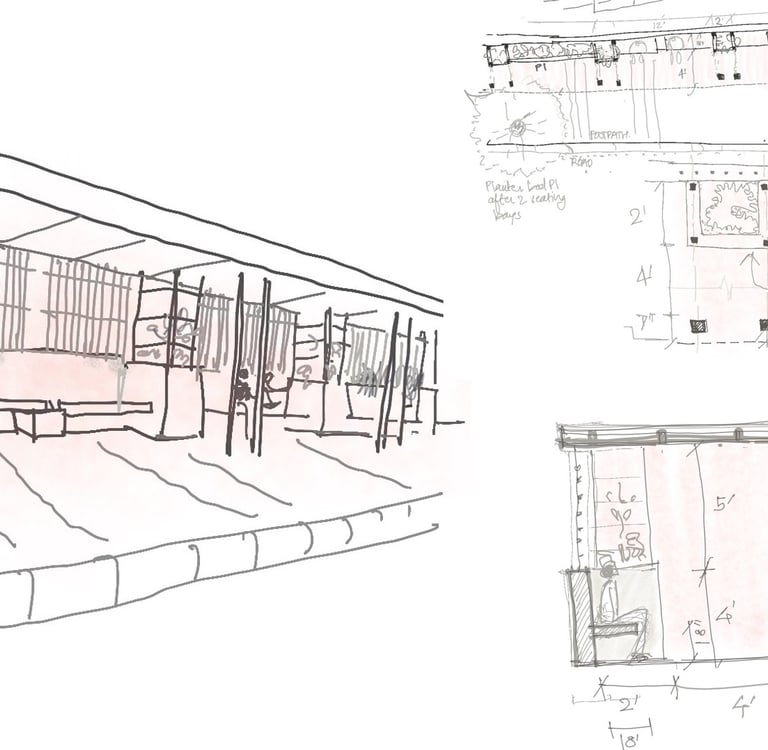
Architecture is not just about the elements we use—it’s about how we experience them. A balcony, when widened even by a foot, can transform into a social nook. A shaded corridor can become a play area, a reading spot, or a pause for an elderly neighbour. These spaces are small but deeply human.

In the Indian context, where climate and community intersect at every turn, these semi-open volumes are not optional—they are fundamental. They allow buildings to breathe, to listen, to extend, and to belong.

Even in high-density urban areas, where cars replace courtyards and verticality dominates, we can rethink the ground floor. Car lifts can reclaim pedestrian space, and balconies can become shared interfaces between neighbors. With the right policies and priorities, architecture can re-centre human activity, not just frame it.

Conclusion: Reclaiming the Dialogue

This is not just a dialogue about facades. It is a conversation about the human condition reflected in architecture. About how we build—not just to shelter—but to relate, to rest, to reflect.

In the race for verticality and volume, let us not forget the power of pause. Let us not flatten our facades into silence, but allow them to speak again—through climate-conscious design, thoughtful materials, and spaces that welcome life between walls.

Because the semi-open space, in all its simplicity, is where strangers become neighbours, and buildings become homes.